From the foundations of the 18th century to modern reference texts: the works that defined actuarial science and trained generations of actuaries.
Actuarial science was built one book at a time. Behind every life policy, every reserve and every pension model lies an intellectual tradition that begins with Jacob Bernoulli's probability and reaches stochastic reserving methods and data science. This is a selection of the profession's most iconic works worldwide (foundational classics, exam texts and research references), with their cover, authorship and why they remain required reading.
The works that founded probability and the mathematics of life insurance.

The work that founded probability theory and proved the law of large numbers. It is the mathematical root of all actuarial science: without it there would be no measurement of risk.

It laid the mathematical foundations of life insurance and pensions. It gave rise to the "Northampton tables," which governed pricing in the British market for decades.
Life, non-life, risk and credibility: the backbone of actuarial education.

"The bible" of life actuarial mathematics. It trained generations of actuaries and was for decades the core text for the SOA exams.

The modern successor to Bowers. The official text for the SOA and IFoA life exams, with an emphasis on cash flows and multiple state models.

The worldwide reference on loss models for property and casualty insurance. The basis of the SOA short-term actuarial modeling exams (STAM/short-term).

An elegant and concise treatment of life insurance mathematics. A European classic valued for its rigor and clarity.

A rigorous reference on non-life insurance: counting processes, ruin theory and aggregate claims models.

A foundational work of risk theory and credibility theory. "Bühlmann credibility" is required reading in pricing.

The bridge between risk theory and practice: solvency and capital models that anticipated the Solvency II framework.
Modern actuarial science rests on financial mathematics, stochastic processes and, increasingly, statistics and machine learning. These texts are classic bridges into those fields.

The classic of financial mathematics. The go-to text for the SOA financial mathematics (FM) exam for decades.

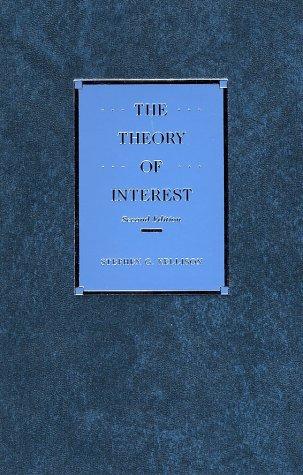
A standard for the SOA FM exam: theory of interest, bond valuation and analysis of financial instruments, with a practical focus.

The global reference on financial derivatives. An indispensable bridge between actuarial science and quantitative finance.

The financial economics text for the SOA IFM/MFE exams. Option valuation and pricing models for actuaries.

A universal classic on stochastic processes and Markov chains. The probabilistic foundation on which actuarial modeling is built.

A bridge between regression statistics and actuarial applications. A forerunner of the profession's turn toward data science.

The modern reference on stochastic reserving (chain ladder, Mack, bootstrap). Essential for reserve valuation and Solvency II.
References by field, aligned with the CAS (property and casualty insurance), AMAC (pensions) and the new wave of predictive analytics.
"The bible" of property and casualty insurance. The Casualty Actuarial Society's reference text: pricing, reserving and risk theory for property and casualty.
A practical entry point to ratemaking and loss reserving in property and casualty insurance. Core reading for the CAS exams.
A modern reference on risk theory: aggregate loss models, credibility, GLMs and ruin theory. Widely used in Europe and in graduate programs.
The text that brought generalized linear models (GLMs) to the heart of insurance pricing. The foundation of actuarial predictive analytics.
A classic of pension mathematics: costing, liabilities and funding of defined benefit plans, with numerical examples.
The reference work on the design, regulation and funding of private pension plans. Essential for the retirement actuary.
Two volumes that consolidate the profession's turn toward data science: GLMs, trees, Bayesian credibility and predictive models applied to insurance.
The most popular entry point to machine learning. Regression, classification, resampling and trees: tools that are now indispensable for the actuary and data scientist.
The modern treatise on ruin theory: probability of insolvency, risk processes and heavy tails. A reference for solvency and capital.
A clear, teaching-oriented text on classical, Bühlmann and Bayesian credibility: how to combine your own experience with market experience for pricing.
It is not a ranking but a map. The foundations explain where the profession comes from; the theory classics remain the basis of the exams of associations such as the SOA, CAS and IFoA; and the finance and data texts point to where it is heading. For Mexican students, many of these titles appear in the reading lists of UNAM, ITAM, Anáhuac and the other actuarial science degree programs.
Covers courtesy of Open Library (openlibrary.org). The images correspond to specific editions cataloged in that open collection and may differ from the most recent edition of each work. Trademarks and covers are the property of their respective publishers; they are shown for informational and bibliographic reference purposes.